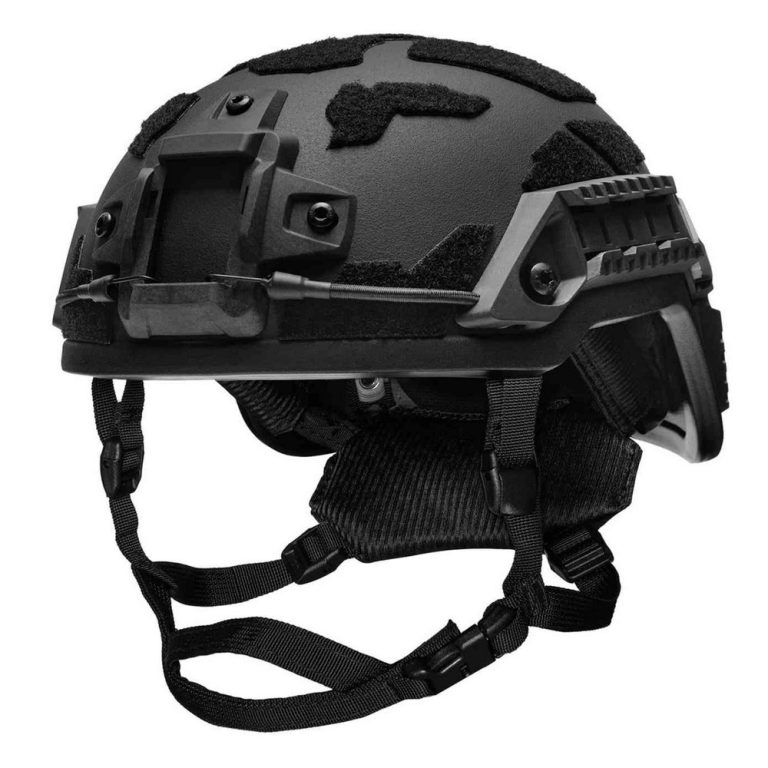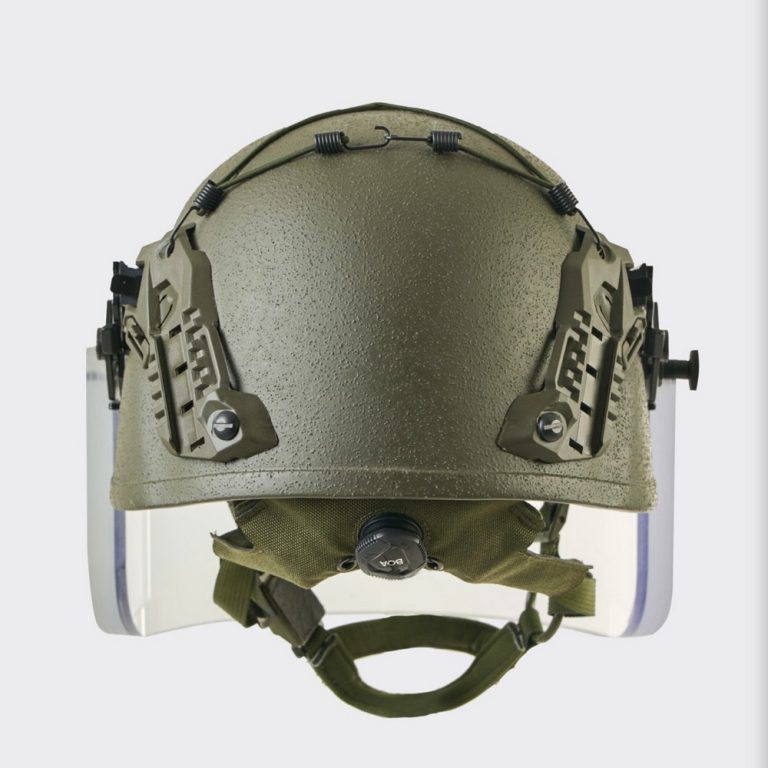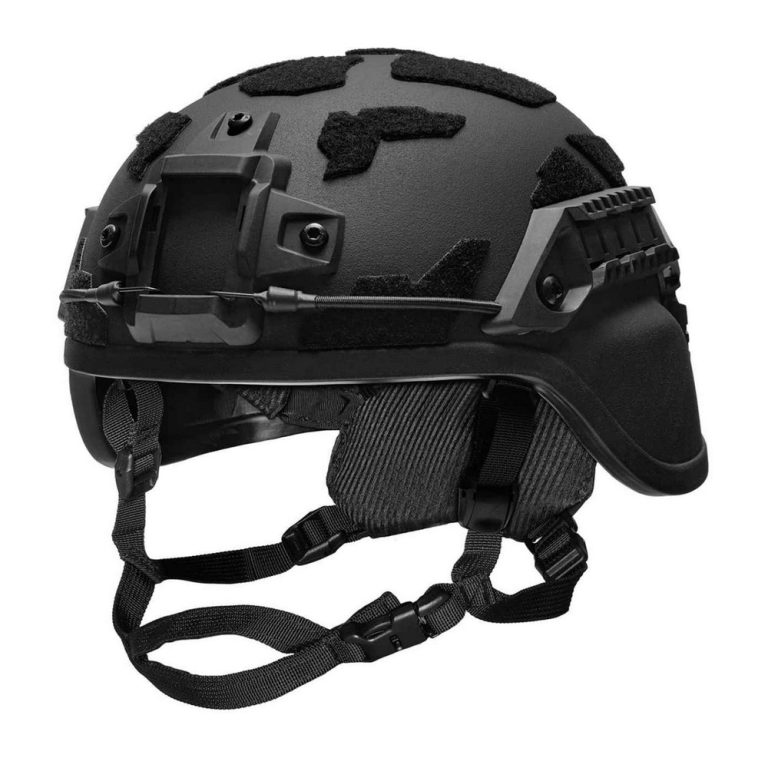



At PANOPLON, you will find ballistic helmets for professional and tactical applications in High Cut, Mid Cut and Full Cut configurations, together with a comprehensive selection of accessories for configuring the helmet according to the user's operational requirements.
Selecting a ballistic helmet involves considerably more than comparing protection levels. Shell material and construction, documented ballistic and fragmentation testing, weight, actual coverage, retention system, internal padding and correct fit are all critical factors when evaluating a helmet.
Helmet cut is another important consideration. Full Cut helmets provide greater shell coverage around the sides of the head and ear area. Mid Cut designs provide a balance between coverage and equipment compatibility, while High Cut helmets reduce lateral coverage to provide additional clearance for electronic hearing protection and communication systems. The choice of cut is therefore not simply aesthetic; it should reflect the mission, equipment configuration and required protection area. Team Wendy
A modern ballistic helmet also functions as an equipment-integration platform. NVG shrouds provide an interface for compatible night-vision mounts, while side rails can accommodate, depending on the system and appropriate adapters, hearing protection and communications equipment, lights, cameras and other accessories. Proper management of these loads becomes particularly important when NVGs or other equipment are mounted at the front of the helmet.
Helmet counterweights can be installed at the rear to improve the balance of a front-mounted NVG system. Helmet covers can protect and organize the exterior of the helmet while providing, depending on their design, attachment areas for Velcro, cable management, identification and additional equipment.
The range is complemented by ballistic or protective visors, side rails, NVG mounts and shrouds, retention systems, internal pads, helmet covers and other configuration components. Compatibility should always be verified between the individual accessory, helmet and mounting interface.
At PANOPLON, we evaluate a ballistic helmet as a complete protective system rather than simply a shell carrying a particular protection rating. We consider documented ballistic and fragmentation performance, materials, cut and actual coverage, weight, fit, retention and suspension, together with the helmet's ability to properly integrate NVGs, hearing protection, communications and other mission-specific equipment.
No account yet?
Create an AccountWe use cookies to improve your experience. With your consent, we process data such as your browsing activity and your preferences (e.g., language). Not accepting certain cookies may affect some functions of the website.